
Earlier stories
The full Modelwire feed, ordered by publish time.

Google takes a page out of Meta’s book, announces new audio-powered smart glasses
Google is entering the audio-first wearable market with smart glasses launching this fall, mirroring Meta's strategy in spatial computing hardware. The move signals a broader shift among major AI labs toward embedding conversational AI and multimodal models directly into consumer devices rather than confining them to phones and desktops. This hardware play matters because it represents a new distribution channel for on-device inference, edge AI optimization, and real-time audio processing. For the AI infrastructure stack, it validates demand for lightweight models capable of running locally on glasses-class processors, potentially reshaping how companies approach model compression and latency optimization.
Meta Employees Are Scrambling to Use Up Benefits Ahead of Layoffs
Meta's imminent 8,000-person workforce reduction signals accelerating consolidation within AI-focused tech leadership. Employees rushing to exhaust benefits before severance reflects broader industry instability as major labs rationalize headcount following aggressive hiring cycles tied to LLM competition. The layoff timing matters for AI infrastructure planning: reduced engineering capacity at a scale-focused player may reshape competitive dynamics in model training, inference optimization, and open-source contribution velocity across the sector.58

OlmoEarth v1.1: A more efficient family of models
Allenai's OlmoEarth v1.1 represents a meaningful step toward practical open-source model efficiency. The update signals that the open research community is closing the gap on inference cost and training overhead, two persistent friction points for enterprises evaluating alternatives to proprietary systems. For teams building on open weights, this release matters because efficiency gains directly translate to lower operational budgets and faster iteration cycles. The timing also reflects broader industry momentum: as frontier labs push toward larger models, the efficiency frontier at mid-scale weights becomes a competitive advantage for adoption.77
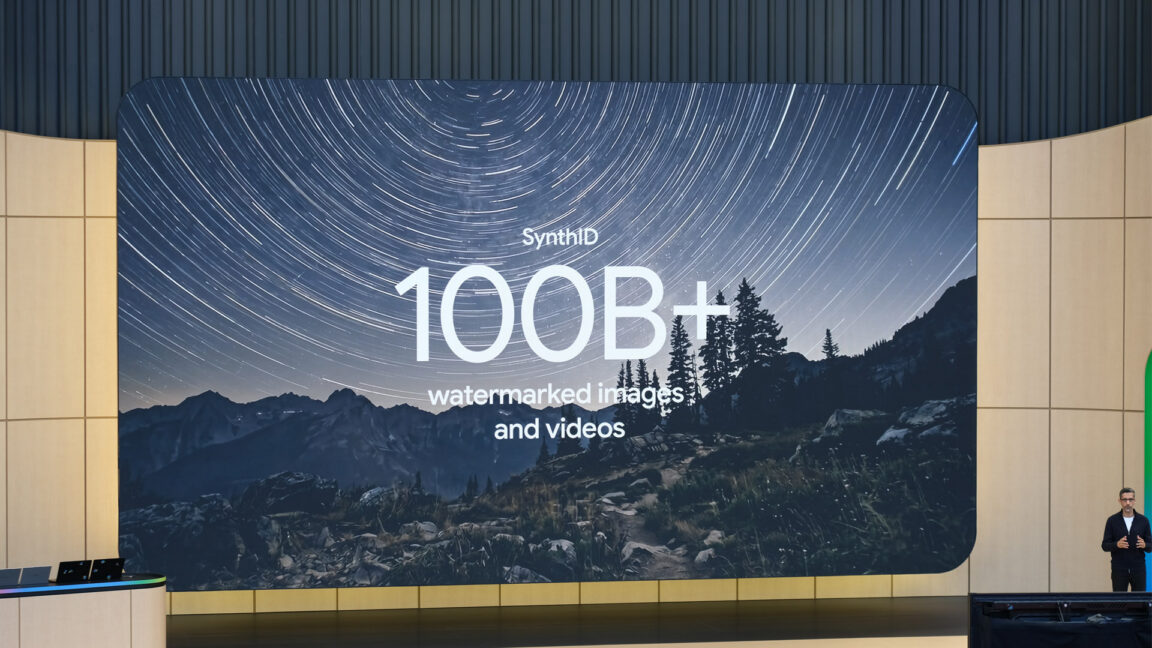
Google's SynthID AI watermarking tech is being adopted by OpenAI, Nvidia, and more
Google's SynthID watermarking technology is gaining traction across the AI industry as OpenAI, Nvidia, and other major players adopt it to authenticate AI-generated content. This cross-industry adoption signals a shift toward standardized provenance mechanisms as synthetic media becomes harder to distinguish from authentic material. The move reflects growing pressure to embed verifiability into AI systems at scale, addressing a critical gap in content attribution that affects both enterprise deployment and public trust in AI outputs.
Gemini will use Volvo’s external cameras to interpret parking signs
Google is embedding multimodal perception into Gemini through automotive hardware, marking a shift toward embodied AI assistants that operate beyond text interfaces. The Volvo EX60 integration grants Gemini access to external vehicle cameras to parse real-world visual data like parking signage, positioning the assistant as a contextual reasoning layer for physical environments. This deployment signals Google's strategy to anchor LLMs in sensor-rich devices where interpretation of surroundings becomes a core value proposition, blurring lines between navigation aids and general-purpose AI agents.
Atoms of Thought: Universal EEG Representation Learning with Microstates
Researchers have developed a universal microstate tokenizer that converts raw EEG signals into discrete, interpretable units of brain activity, enabling transfer learning across clinical and cognitive tasks. This approach mirrors successful tokenization strategies in NLP and vision, suggesting that treating neural data as a discrete sequence problem rather than continuous temporal signals unlocks better generalization. The work bridges neuroscience and modern deep learning, with implications for scaling brain-computer interfaces and neurological diagnostics beyond single-task models.58

TIDE: Efficient and Lossless MoE Diffusion LLM Inference with I/O-aware Expert Offload
Diffusion-based LLMs paired with mixture-of-experts routing are emerging as efficiency alternatives to autoregressive models, but their deployment on edge devices has hit a wall due to I/O overhead and compute bottlenecks. TIDE addresses this by exploiting temporal stability in expert activation patterns across diffusion steps, enabling selective offloading of model parameters without accuracy loss. This work matters because it expands the deployment surface for a promising architectural direction that trades autoregressive latency for parallel throughput, potentially reshaping how resource-constrained inference gets tackled as model scale continues upward.58

From Seeing to Thinking: Decoupling Perception and Reasoning Improves Post-Training of Vision-Language Models
A new decomposition framework for vision-language model training reveals that visual perception, not reasoning depth, is the primary bottleneck in current VLM performance. By isolating perception, visual reasoning, and textual reasoning into staged training phases with specialized datasets, researchers found that reinforcement learning outperforms caption-based supervised fine-tuning for perception tasks. This challenges the industry's recent emphasis on chain-of-thought scaling and suggests post-training efficiency gains may come from architectural separation rather than longer reasoning chains, reshaping how teams should allocate compute in multimodal model development.62

ClinSeekAgent: Automating Multimodal Evidence Seeking for Agentic Clinical Reasoning
ClinSeekAgent represents a meaningful shift in how agentic AI systems approach real-world clinical reasoning. Rather than assuming curated evidence, this framework trains agents to autonomously navigate heterogeneous data sources including EHRs, medical knowledge bases, and imaging tools, then iteratively refine diagnostic hypotheses as new information surfaces. This addresses a critical gap between academic benchmarks and production clinical workflows, where evidence synthesis remains fragmented across siloed systems. The work signals growing maturity in multimodal agent design for high-stakes domains where passive consumption of pre-packaged context is insufficient.62

Multi-axis Analysis of Image Manipulation Localization
Researchers have released AUDITS, a 530K-image benchmark for evaluating image manipulation detection across multiple real-world conditions. The dataset spans user and news photography, enabling systematic testing of how detection models degrade under domain shifts, quality variations, and different manipulation types and scales. This addresses a critical gap in synthetic media verification as generative AI makes convincing forgeries trivial to produce. For practitioners building content moderation systems, the benchmark provides a standardized evaluation framework that moves beyond single-domain lab conditions, directly informing robustness requirements for production deployments.58
The 13 biggest announcements at Google I/O 2026
Google's I/O 2026 keynote positioned the company's AI roadmap around incremental model scaling and consumer integration rather than architectural breakthroughs. The Gemini 3.5 family signals continued reliance on iterative capability gains, while expanded Search and Gmail features reflect the industry's shift toward embedding AI into existing workflows. Project Aura smart glasses suggest Google is betting on wearable AI as a differentiator, though the announcement lacks detail on novel capabilities or competitive moats. For investors and practitioners, the event underscores that frontier labs are now optimizing deployment and monetization over raw model innovation.
KoRe: Compact Knowledge Representations for Large Language Models
KoRe addresses a fundamental architectural tension in LLMs: knowledge baked into parameters is opaque, brittle, and prone to hallucination, while knowledge graphs offer interpretability and editability but have historically required expensive retraining to integrate. This work proposes a method to couple external structured knowledge with LLM inference without full model retuning, potentially shifting how production systems balance parametric and symbolic reasoning. Success here could reshape knowledge-intensive applications and reduce the operational friction of keeping LLM outputs grounded in updatable facts.62

HaorFloodAlert: Deseasonalized ML Ensemble for 72-Hour Flood Prediction in Bangladesh Haor Wetlands
Researchers deployed a deseasonalized ML ensemble to forecast flash floods in Bangladesh's haor wetlands, a domain where standard riverine models fail due to flat basin hydrology. The system catches a critical methodological trap: temperature inflates accuracy by nearly 7 percentage points simply because floods cluster in warm months, not because temperature predicts flood mechanics. By removing this seasonal confound and layering Sentinel-1 SAR change detection from upstream Assam as a 36-hour proxy signal, the ensemble achieves 84-91 percent spatial validation. This work exemplifies how domain-specific ML requires adversarial scrutiny of feature leakage and multimodal sensor fusion to move from lab benchmarks to operational utility in climate-vulnerable regions.58

Generating novel scientific hypotheses with Co-Scientist
Google DeepMind has released Co-Scientist, a multi-agent Gemini system designed to accelerate scientific discovery by autonomously generating, critiquing, and refining research hypotheses. The system addresses a critical bottleneck in modern science: transforming raw information into actionable experimental directions. This represents a meaningful shift in how AI augments the research process, moving beyond literature retrieval into active hypothesis generation and debate. The work, published in Nature, signals that frontier labs now view AI as capable of participating in the earliest, most creative stages of scientific inquiry, not merely executing predetermined experiments.
Google’s Genie world model can now simulate real streets with Street View
Google DeepMind is anchoring generative world models to real-world geography by fusing Street View data with Project Genie, enabling spatially grounded simulations for robotics training and interactive experiences. This represents a critical shift from synthetic environments toward foundation models that understand actual urban layouts, weather dynamics, and edge cases. The integration addresses a core robotics bottleneck: sim-to-real transfer now has authentic reference geometry rather than procedurally generated proxies. Implications span autonomous systems development, embodied AI benchmarking, and the emerging category of location-aware generative simulators.
With Gemini 3.5 Flash, Google bets its next AI wave on agents, not chatbots
Google's Gemini 3.5 Flash signals a strategic pivot from conversational AI toward autonomous agents capable of independent task execution and software generation. This shift reflects the industry's maturation beyond chatbot interfaces toward systems that can reason, plan, and act without human intervention at each step. For developers and enterprises, the move raises questions about agent reliability, oversight mechanisms, and the competitive pressure on OpenAI and Anthropic to match agentic capabilities. The emphasis on coding and complex task automation suggests Google is betting that the next wave of AI value accrues to systems that reduce human labor rather than augment it.
Using AI to outsmart drug-resistant bacteria
DeepMind researchers at Cambridge are collapsing years of drug discovery into minutes by pairing structural biology with AlphaFold and Gemini to reverse-engineer bacterial resistance mechanisms. The work signals a strategic shift in how AI tackles antimicrobial resistance, a public health crisis where traditional antibiotic development has stalled. By automating the identification of hidden bacterial defenses, the team demonstrates AI's capacity to compress iterative scientific workflows into tractable timescales, potentially reshaping how biotech approaches pathogen evolution.
Understanding cancer at a genetic level with AI
DeepMind's computational biology toolkit is enabling resource-constrained research institutions to tackle oncology at scale. Makerere University's team leveraged AlphaFold and AlphaGenome to screen 15,000 protein binding sites for early-onset breast cancer vaccine targets in Uganda, reducing the search space to 15 candidates for wet-lab validation using only commodity hardware. This case study signals a shift in how AI infrastructure democratizes biomedical discovery across the Global South, where disease burden is highest but computational access has historically been limited. The work underscores DeepMind's pivot toward applied impact and suggests that foundation models for biology are maturing beyond research papers into operational tools for clinical translation.
Predicting a historic storm earlier with WeatherNext
Google DeepMind's WeatherNext model demonstrated measurable real-world impact by forecasting Hurricane Melissa's intensity and track days in advance, enabling authorities to issue timely evacuation orders in Jamaica. The deployment marks a shift in how specialized AI systems move from research into operational meteorology, with DeepMind now collaborating directly with the National Hurricane Center to integrate neural forecasting into institutional decision-making. This represents a concrete case study in domain-specific model deployment where prediction accuracy directly translates to life-safety outcomes, signaling growing institutional confidence in AI-driven weather systems for high-stakes applications.
How to use Google’s new information agents
Google is deploying autonomous information agents capable of continuous background monitoring and proactive alerting, marking a shift from reactive search toward persistent AI assistants that anticipate user needs. This represents a meaningful expansion of agentic AI beyond one-shot query resolution into sustained task execution, directly competing with similar initiatives from OpenAI and Anthropic. The move signals how major platforms are embedding agent capabilities into core products rather than isolating them as experimental features, reshaping expectations around what constitutes a search or productivity interface.
Google wants to compete with Anthropic’s Mythos
Google is expanding CodeMender, its AI-powered code security agent, from closed testing to broader external availability following its October debut. The move signals Google's competitive positioning in the enterprise AI tooling space, where specialized agents for developer workflows are becoming table stakes. By widening API access, Google aims to capture mindshare in a market where security-focused AI agents could become critical infrastructure for engineering teams, particularly as rivals like Anthropic push similar capabilities.
Streamer Realtime Deepfakes Himself into Mr. Beast, Says He Loves 'Touching Little Boys'
Delulu, a deepfake tool marketed to streamers, enables real-time face-swapping into public figures and other content creators. The incident highlights how accessible generative video has become for entertainment contexts, while raising immediate concerns about impersonation, defamation, and the absence of friction between capability and misuse. This reflects a widening gap between synthetic media tooling maturity and platform governance, forcing streaming platforms and AI vendors to confront liability and moderation at scale.69

Interpretable Computer Vision for Defect Detection in X-ray Tomography of Aerospace SiC/SiC Composites
Researchers have developed p-ResNet-50, a prototype-based convolutional architecture that marries high-accuracy defect detection with human-interpretable explanations for aerospace composite inspection. Rather than treating deep learning as a black box, the model grounds its classifications in six learned prototypes aligned to expert-defined defect categories, making accept/reject decisions traceable and auditable. This work signals a maturing shift in industrial AI: moving beyond raw accuracy to coupling automation with the transparency and accountability that regulated manufacturing demands. The approach has implications beyond composites for any high-stakes inspection domain where regulatory bodies or customers require explainability alongside performance.58

Rethinking Visual Attribution for Chest X-ray Reasoning in Large Vision Language Models
Researchers have developed a causal evaluation framework to verify whether visual attribution methods in large vision language models actually reflect the reasoning behind their predictions, addressing a critical gap in clinical trustworthiness for medical AI. By using counterfactual editing on chest X-ray datasets, the work validates whether model explanations correspond to genuine decision factors rather than post-hoc rationalizations. This matters because medical deployments increasingly rely on interpretability claims that remain largely unverified, and this framework offers a methodological path to ground those claims in evidence.62

SAGE: Scalable Automatic Gating Ensemble for Confident Negative Harvesting in Fraud Detection
SAGE addresses a blind spot in fraud detection: distinguishing genuine edge cases from coordinated manipulation when labeled data is scarce. By combining SimHash stratification with a modular gating ensemble that applies statistical filters like Mahalanobis distance and k-NN density, the approach enables confident negative harvesting from unlabeled streams. This counterfactual-aware technique matters beyond music fraud, signaling how ML systems can reduce false positives in high-stakes domains where legitimate behavior mimics adversarial patterns. The work reflects growing maturity in handling imbalanced, noisy real-world classification where traditional supervised methods fail.58

Google Search as you know it is over
Google is fundamentally restructuring Search by replacing its traditional link-based interface with an AI-native layer that synthesizes answers conversationally, deploys autonomous agents, and surfaces interactive tools directly. This shift signals a strategic pivot away from the indexing-and-ranking model that defined search for three decades, forcing a reckoning across the publisher ecosystem as traffic patterns fracture. The move reflects broader industry momentum toward agentic AI systems that reduce friction between user intent and actionable output, raising questions about how discovery, attribution, and monetization function in a post-link web.
Would you let robots spend your money? Google is betting on it
Google is expanding its AI commerce infrastructure by launching a Universal Cart that consolidates shopping across retailers and integrates with Gemini, YouTube, and Gmail. This represents a strategic pivot toward autonomous transaction handling, positioning AI agents as financial decision-makers rather than mere search tools. While competitors retreat from AI-driven commerce, Google's bet signals confidence that LLM-powered purchasing workflows will become normalized, raising questions about liability, fraud prevention, and user trust in delegated spending authority.
Google is launching its own version of OpenClaw
Google's Gemini Spark represents a direct competitive response to OpenClaw's agent-based platform, signaling intensifying competition in the autonomous AI agent space. The product targets practical, always-on use cases spanning productivity (email composition, study materials) and financial monitoring, positioning Google to capture share in a market segment that has become strategically central to LLM monetization. This move reflects a broader industry shift toward agent-first architectures rather than chat interfaces, with major players now racing to embed autonomous reasoning into everyday workflows.