
Earlier stories
The full Modelwire feed, ordered by publish time.

How Wasmer used Codex to build a Node.js runtime for the edge
Wasmer's deployment of Codex and GPT-5.5 to architect a Node.js edge runtime demonstrates how code-generation LLMs are collapsing development cycles for infrastructure projects. The reported 10x to 20x acceleration, compressing a multi-month effort into weeks, signals a structural shift in how runtime and toolchain teams approach complex systems work. This case study matters beyond Wasmer because it validates LLM-assisted engineering at the systems level, where correctness and performance constraints traditionally demanded human expertise. The edge-runtime category is heating up as a competitive frontier, and LLM-driven development velocity could reshape which teams ship first.88
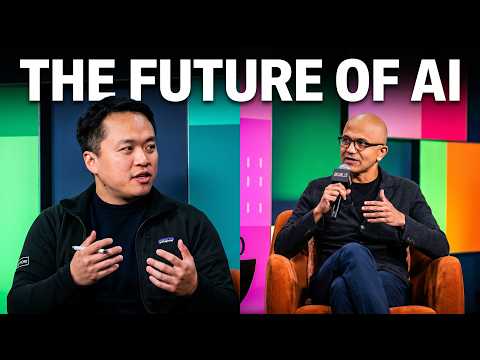
Satya Nadella on AI: @NoPriorsPodcast x Latent Space Crossover Special at Microsoft Build 2026
Nadella frames Microsoft's AI strategy as a shift from single-model consumption to an ecosystem where enterprises build frontier intelligence through modular components: models, tools, data infrastructure, and multi-model harnesses. The company is moving beyond per-user licensing toward consumption-based pricing and positioning coding agents and Work IQ (which surfaces Microsoft 365 data for agent automation) as drivers of new UI/IDE paradigms. This signals a fundamental repositioning of enterprise AI from vertical SaaS to horizontal agent infrastructure, with implications for how engineering teams architect systems and how vendors compete on data lineage and private evaluation IP rather than model weights alone.85

AI music startup Suno doubles its valuation to $5.4 billion while fighting major record labels in court
Suno's $400 million funding round at $5.4 billion valuation signals sustained investor confidence in generative music despite intensifying legal pressure from major record labels. The financing underscores a critical inflection point in AI audio: while copyright disputes threaten the business model, capital markets are betting that either litigation will resolve favorably or the technology's commercial potential justifies the legal risk. This mirrors broader tensions in generative AI between training-data acquisition and IP protection, with Suno's trajectory now a bellwether for whether music-generation startups can survive courtroom battles.85

The Classical Advances Needed to Make Quantum Computers Tick
Quantum computing's scaling bottleneck isn't quantum. As qubit counts climb, the classical infrastructure orchestrating these systems becomes the limiting factor in real-world deployment. Nvidia's new AI-driven software and Q-CTRL's automatic calibration algorithms represent a strategic shift: the industry is treating quantum-classical integration as a core systems problem, not an afterthought. This matters because quantum advantage remains theoretical without robust classical support layers. Companies investing in this unglamorous but essential layer are positioning themselves as the actual enablers of quantum utility, not just quantum hardware vendors.
Nvidia’s RTX Spark Laptops Look Hell-Bent on Disruption
Nvidia's RTX Spark chips represent a potential inflection point in consumer AI hardware, moving beyond marketing hype toward practical on-device inference capabilities. The architecture targets the long-promised 'AI PC' segment by embedding sufficient compute for real-time model execution without cloud dependency. This shift matters because it could reshape where inference happens in the stack, reduce latency-sensitive workloads' reliance on cloud APIs, and force software vendors to optimize for edge deployment. Success here would validate a hardware-first path to AI adoption that competes directly with cloud-centric inference models.69

Nous Research releases Hermes Desktop, an open-source AI agent for every platform
Nous Research has open-sourced Hermes Desktop, an MIT-licensed AI agent application designed for cross-platform deployment. This move signals a shift toward democratizing agent infrastructure beyond closed ecosystems, allowing developers to build and customize autonomous workflows without vendor lock-in. The release matters because it expands the competitive surface for agentic AI beyond frontier labs, potentially accelerating adoption of local-first agent patterns as enterprises seek alternatives to cloud-dependent solutions.68

Build 2026: Microsoft tops Google in image generation while playing catch-up on reasoning
Microsoft's Build 2026 keynote revealed a strategic pivot in its AI roadmap: seven proprietary models including its debut reasoning system, signaling an attempt to close the gap with OpenAI and Anthropic on complex reasoning tasks. Simultaneously, the company claims leadership in image generation over Google, suggesting a two-front competitive positioning. The introduction of a new tuning methodology and autonomous background agent indicates Microsoft is investing in both model capability and practical deployment infrastructure, moving beyond reliance on partner models toward a vertically integrated AI stack.85

What’s Worth More Than Cash in San Francisco Real Estate? Anthropic Stock
San Francisco real estate agents are now accepting Anthropic equity as payment for home purchases, signaling how AI startup valuations have become a de facto currency in the Bay Area's asset markets. This reflects both the region's speculative appetite for frontier AI and a practical liquidity problem: employees and investors holding illiquid startup stakes lack conventional exit paths. The trend underscores Anthropic's perceived valuation strength relative to traditional wealth stores, while also revealing how concentrated AI wealth creation has become geographically and demographically. For investors tracking AI market sentiment, this is a barometer of insider confidence in the company's trajectory.58

A blueprint for democratic governance of frontier AI
OpenAI has released a formal governance framework addressing how the U.S. federal government should regulate frontier AI systems, focusing on safety standards, infrastructure resilience, and national security implications. The proposal signals a shift in how leading labs are engaging with policymakers, moving beyond reactive compliance toward proactive institutional design. This matters because it establishes OpenAI's preferred regulatory architecture at a moment when Congress and agencies are still forming baseline AI policy, potentially shaping competitive dynamics and compliance costs across the industry.94

OpenAI public policy agenda
OpenAI has formalized a public policy framework addressing four structural challenges facing AI deployment: safety assurance, protection of minors, labor market adaptation, and interoperable governance standards. The agenda signals a shift from reactive compliance toward proactive standard-setting, positioning the company as a policy architect rather than a regulated entity. This move matters because it shapes how regulators globally will approach AI governance, influences workforce retraining initiatives, and establishes OpenAI's preferred regulatory baseline before fragmented national rules calcify. For industry insiders, the framework reveals which policy vectors OpenAI sees as existential to its long-term operations and market access.88

The Nvidia AI PC, Project Solara, Microsoft AI
Stratechery's analysis positions Microsoft's Build conference vision for AI-integrated devices as strategically superior to Nvidia's Project Solara, signaling a shift in how the industry thinks about AI hardware commoditization. The comparison reflects deeper tensions in the AI PC market: Nvidia's approach emphasizes local compute power, while Microsoft's framework prioritizes cloud-device orchestration and software integration. This divergence matters because it shapes whether future AI adoption hinges on edge silicon dominance or platform lock-in through services. For infrastructure investors and device makers, the verdict suggests the next wave favors companies controlling the software layer over those betting solely on chip performance.73

AI has a water problem. Google thinks it has a fix
Google is responding to mounting environmental criticism of AI infrastructure by committing to water replenishment in regions hosting its data centers. The company's five-point water strategy signals a shift in how major AI builders are framing the sustainability trade-offs of large-scale model training and inference. This move reflects broader pressure on the industry to quantify and offset the resource footprint of AI deployment, setting a potential precedent for how competitors justify continued datacenter expansion amid regulatory and public scrutiny.
Redditors Are Using AI to Beat Obscene World Cup Ticket Prices
Grassroots Reddit communities are leveraging Claude to automate World Cup ticket acquisition, circumventing official resale channels and undercutting scalper markups through coordinated software development. This represents an emerging pattern of LLM-enabled consumer coordination against market friction, where accessible AI tools lower barriers to building custom transaction infrastructure. The shift signals how generative models are becoming utilities for collective action on high-friction consumer problems, potentially reshaping secondary markets where information asymmetry and automation gaps have historically favored intermediaries.58

Google must let publishers opt out of AI Search features, rules UK
The UK's Competition and Markets Authority has mandated that Google grant publishers granular control over content inclusion in AI Search features like AI Overviews. This regulatory intervention reshapes the economics of generative AI systems that rely on web-scale training data and real-time retrieval. The ruling signals a structural shift: major jurisdictions are now enforcing publisher consent mechanisms rather than relying on robots.txt or opt-out frameworks, directly constraining how AI products can ingest and synthesize third-party content at scale. For AI builders, this precedent narrows the data moat and raises compliance friction across markets.
Google Is Quietly Buying Code From Play Store Developers to Train AI
Google is running a confidential acquisition program targeting Android developers' source code for AI training, signaling a shift in how frontier labs source training data beyond public repositories. This move reflects intensifying competition for high-quality, diverse code corpora to improve LLM performance on programming tasks, while raising questions about developer consent, compensation structures, and whether proprietary codebases will become a standard training input. The strategy suggests Google views developer-owned code as strategically valuable enough to negotiate directly, potentially reshaping how AI companies value and acquire training assets.76

An economist's case against the AI jobs-pocalypse
Labor economist Kathryn Anne Edwards challenges the prevailing narrative that AI will render large populations permanently unemployed, arguing instead that displacement is manageable if policy responds proactively. Her position reframes the AI jobs debate away from technological inevitability toward institutional readiness, suggesting the real risk lies not in automation itself but in inadequate social infrastructure. This perspective matters for AI stakeholders because it shifts focus from whether AI disrupts labor (settled) to whether governments can architect safety nets fast enough, making policy design a competitive advantage for regions that move first.68

Introducing the Services Track and Partner Hub of the Claude Partner Network
Anthropic is formalizing its go-to-market strategy by launching a dedicated Services Track and Partner Hub within the Claude Partner Network. This move signals a shift toward ecosystem-driven adoption, allowing system integrators and service providers to build Claude-native offerings at scale. The initiative reflects competitive pressure to match OpenAI's partner infrastructure while addressing enterprise demand for managed implementation and customization. For builders and enterprises, this creates clearer pathways to productize Claude integrations without direct vendor dependency.81

What we learned mapping a year’s worth of AI-enabled cyber threats
Anthropic's year-long analysis of AI-enabled cyber threats reveals how large language models are reshaping attack surfaces and defensive strategies. The research maps concrete patterns in how threat actors leverage AI for reconnaissance, social engineering, and exploit development, moving beyond speculation to empirical threat modeling. This matters for security teams and AI builders alike: it establishes baseline threat intelligence for the emerging attack surface, informs responsible disclosure practices, and signals where AI safety and cybersecurity communities must converge. The findings likely shape how enterprises architect defenses and how labs design safeguards into frontier models.94

Cyera eyes $12B valuation at 80x ARR multiple despite operating losses
Cyera's pursuit of a $12 billion valuation at 80x ARR signals investor appetite for cybersecurity infrastructure plays tied to AI-driven threat detection and data protection. The $300 million round from Evolution Equity Partners reflects confidence that AI-native security tooling commands premium multiples despite near-term losses, a pattern reshaping how enterprise software investors value companies defending AI systems and data pipelines from emerging attack surfaces.
Microsoft's new MAI models
Microsoft is fragmenting its model strategy with two specialized releases: MAI-Thinking-1 targets reasoning workloads at 35B parameters for enterprise partners, while MAI-Code-1-Flash (5B) ships directly into GitHub Copilot's IDE integration. This dual-track approach signals Microsoft's pivot away from monolithic foundation models toward task-specific efficiency, mirroring OpenAI's o1/GPT-4o split. The Code variant's immediate rollout to individual developers matters more than the reasoning model's gated access, as it embeds inference cost reduction directly into the most-used AI development surface.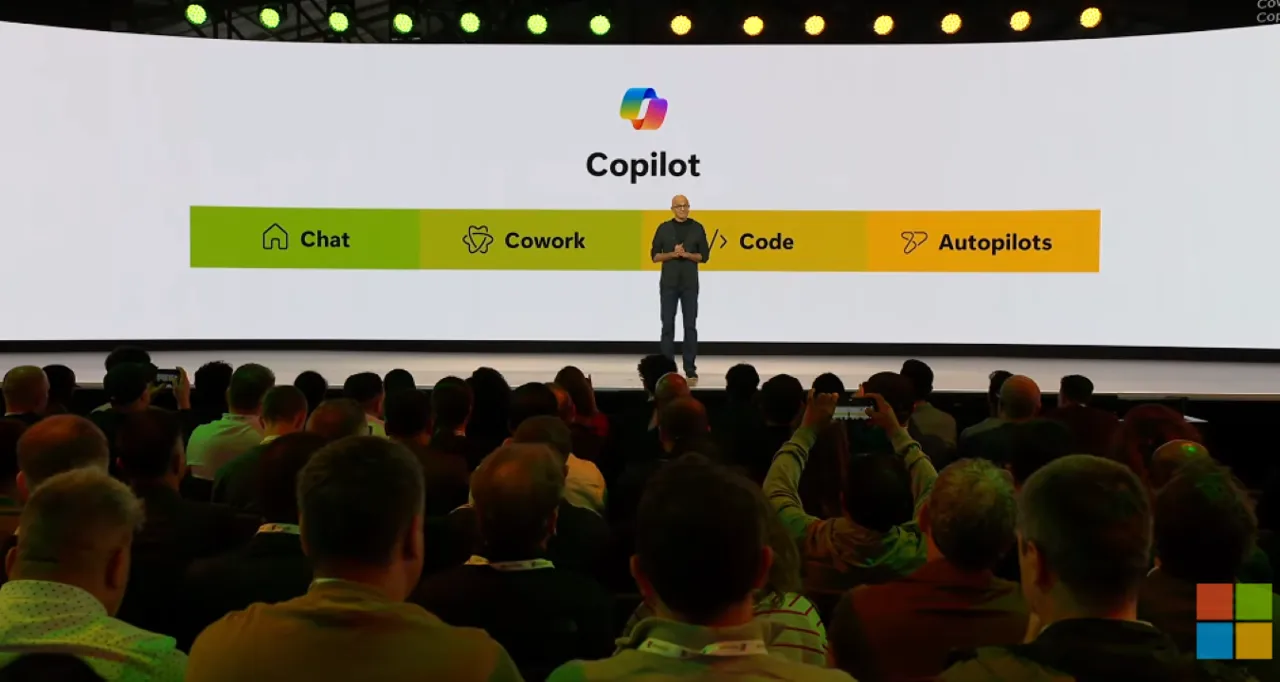
Microsoft Fully Commits to AI Models, Intros Unmetered Intelligence
Microsoft is positioning its cloud platform as a comprehensive AI deployment layer by removing consumption caps on model access and agent-building infrastructure. The move signals a strategic bet that enterprises will consolidate AI workloads within a single vendor ecosystem rather than multi-cloud or open-source alternatives. This directly challenges OpenAI's standalone positioning and forces competitors to clarify their own cloud integration strategies. For practitioners, the shift means pricing models and lock-in dynamics are reshaping how teams evaluate AI infrastructure choices.61

Microsoft's Project Solara is an Android OS designed for agents instead of apps
Microsoft is pivoting its mobile strategy away from traditional app-centric design toward an agent-first operating system with Project Solara. Built on Android, the OS prioritizes autonomous AI agents as first-class citizens rather than user-driven applications, signaling a fundamental shift in how major platforms envision human-computer interaction. This move reflects the industry's broader bet that agentic AI will displace conventional app paradigms, positioning Microsoft to compete in a post-app mobile landscape dominated by autonomous task execution rather than manual user workflows.
datasette-agent-micropython 0.1a0
Datasette Agent now has a sandboxed Python execution layer built on MicroPython, allowing LLMs to generate and run code without escape risk. Simon Willison reports GPT-5.5 has failed to break the sandbox in early testing, addressing a critical blocker for agentic systems that need safe code generation. This matters because code execution is essential for data querying and automation workflows, but remains a major security surface; a working sandbox unlocks broader deployment of agent-driven data tools without requiring human review of every generated script.
Microsoft Build 2026: the 7 biggest announcements
Microsoft's Build 2026 keynote signaled a strategic pivot toward embedding AI deeper into its consumer and enterprise stack. Beyond hardware refreshes, the company unveiled an always-on personal assistant and refreshed its in-house model lineup, positioning itself to compete directly with OpenAI and Google in the race to make AI ambient and indispensable. The moves suggest Microsoft is betting that integration across Surface, Windows, and cloud services will matter more than raw model capability in the next phase of AI adoption.
Uber caps employee AI spending after blowing through budget in four months
Uber's decision to impose spending caps on employee AI tool usage signals a broader reckoning within enterprise over generative AI's true operational cost. The company had actively encouraged staff adoption, only to discover that unconstrained access to commercial AI services burned through budgets in under half a year. This pattern reflects a critical gap between AI enthusiasm and financial discipline in large organizations, forcing teams to choose between capability and cost control. The move underscores that enterprise AI ROI remains unproven at scale, and that early adopters now face hard choices about which use cases justify ongoing spend.
New Microsoft tool lets devs spin up AI behavior tests using text descriptions
Microsoft released Adaptive Spec-driven Scoring for Evaluation and Regression Testing, an open-source framework that lets developers define AI evaluation criteria through natural language rather than hand-coded test suites. The move addresses a critical bottleneck in AI development: systematic, reproducible testing at scale. By lowering the barrier to rigorous evaluation, Microsoft is pushing the industry toward more standardized assessment practices, which matters for both safety validation and production reliability as models move into enterprise workflows.
OpenAI vs. Anthropic vs. Google: But the Model Isn't the Point
The competitive framing of AI labs obscures what enterprise buyers actually prioritize: solving business problems cost-effectively. As OpenAI, Anthropic, and Google jostle for mindshare, procurement decisions increasingly hinge on integration ease, total cost of ownership, and task-specific performance rather than brand loyalty or model pedigree. This shift signals maturation in the AI market, where differentiation moves upstream to applications and workflows, not foundation models alone. For enterprises, the implication is clear: vendor lock-in weakens as model commoditization accelerates, forcing labs to compete on reliability, support, and ecosystem depth.61
Microsoft Wants to 'Make People Addicted' to its New AI Assistant, Internal Documents Reveal
Microsoft's internal strategy for Scout, a new AI assistant, prioritizes user habit formation before feature expansion, according to leaked planning documents. The approach signals a shift in how major AI vendors are thinking about adoption curves: establishing behavioral lock-in as a prerequisite to capability rollout, rather than competing primarily on raw performance. This reflects broader industry tension between engagement metrics and responsible AI deployment, and raises questions about how addiction mechanics are being engineered into enterprise and consumer AI tools at scale.69

OpenAI expands Codex with role-specific plugins to build a general-purpose app for non-developers
OpenAI is repositioning Codex as enterprise infrastructure rather than a developer tool by shipping role-specific plugins for finance, sales, and analytics workflows. The shift reflects a strategic pivot: non-developers now represent 20% of Codex's five-million-person weekly base and are growing three times faster than the developer cohort. This signals OpenAI's bet that LLM-powered productivity tools will succeed by meeting domain experts where they work, not by asking them to learn to code. The move mirrors broader industry consolidation around vertical AI applications and raises questions about whether horizontal coding assistants remain a defensible category.73