
Opinion & Analysis
Essays, op-eds, deep analysis, predictions, retrospectives - usually from a known author.

Has Microsoft Lost Its Mojo (Again)?
Microsoft's commercial AI strategy faces mounting pressure as flagship products underperform in the market and GitHub Copilot encounters operational friction. The company's struggle to convert AI investments into revenue signals a broader challenge for enterprise AI adoption: building products that justify premium pricing in a crowded landscape. With competitors accelerating capability releases, Microsoft's stumble raises questions about whether first-mover advantage in AI integration translates to sustainable competitive moats or whether the market will consolidate around fewer, more differentiated players.69

K-pop Fans Are Calling Out Creepy Deepfakes of Idols
K-pop fandom mobilization against synthetic media abuse reveals a critical gap in platform governance and generative AI ethics enforcement. As deepfake technology becomes more accessible, communities are self-organizing to counter non-consensual sexualized content targeting public figures, exposing how current moderation systems fail to prevent harm at scale. This grassroots pushback signals growing friction between generative capability and social accountability, forcing platforms and AI developers to confront liability for downstream misuse of their tools.65

Can AI tell if your script will make a hit film?
Quilty, an AI startup claiming to predict film box-office performance from scripts alone, has faced skepticism from industry practitioners testing its product. The gap between the startup's initial promise and real-world validation highlights a recurring pattern in AI applications: overconfidence in predictive models when applied to inherently complex, subjective domains like entertainment. This case underscores how even data-rich scenarios can expose the limits of current AI systems when facing cultural and creative variables that resist quantification.
AI Has Come for Serif Fonts
Design choices in AI interfaces have become a proxy for perceived trustworthiness. Major AI companies are adopting serif typefaces to signal human-centered values and authenticity, a strategic shift in how AI products communicate their positioning. The backlash term 'tasteslop' reflects growing skepticism about whether aesthetic choices can authentically convey safety or alignment when the underlying systems remain opaque. This tension between visual branding and substantive AI governance reveals how product design now functions as a critical battleground in the AI legitimacy wars, shaping user perception faster than technical documentation or policy frameworks.58

Mira Murati steps back into the spotlight, carefully
Mira Murati's return to public visibility signals a strategic recalibration in how AI leadership manages market perception during periods of organizational transition. The move reflects a broader pattern among senior AI figures who recognize that sustained absence from industry discourse risks losing influence and mindshare, particularly as competition for talent and narrative control intensifies. For insiders tracking leadership dynamics at major AI labs, this repositioning matters less as news and more as a tell about how executives are adapting to an environment where technical credibility alone no longer sustains relevance.
AI enthusiasts are in a race against time, AI skeptics are in a race against entropy
Charity Majors articulates a widening strategic divide in software development: teams aggressively integrating AI tooling are capturing discontinuous capability gains that create genuine competitive moats, while organizations adopting a wait-and-see posture risk obsolescence before the technology matures. This framing resets the adoption calculus from 'hype cycle patience' to 'capability race with real business consequences', suggesting the window for catching up may be narrower than traditional tech transitions allow. The insight matters because it challenges the assumption that skepticism is a defensible stance.
Satya Nadella ‘Not Sure’ Who Said Microsoft Wanted to Make Addictive AI, Is Looking for Guy Who Did This
Satya Nadella's apparent unfamiliarity with internal statements about Microsoft's AI strategy raises questions about organizational alignment at a critical moment for enterprise AI deployment. The incident underscores tension between public commitments to responsible AI development and operational realities within major vendors. For enterprises evaluating Microsoft's AI roadmap and safety posture, this signals potential gaps between leadership messaging and ground-level product direction, complicating trust assessments during vendor selection.58

Quoting Emanuel Maiberg, 404 Media
Google's internal culture reveals fractures around AI quality and deployment strategy. After 404 Media published employee criticism, Google's PR team requested removal of language emphasizing human oversight from an official statement, signaling tension between safety rhetoric and product velocity. The incident exposes how large labs manage dissent and messaging around AI reliability, with implications for how public commitments to responsible AI deployment actually translate within organizations.
Bain study finds companies miss AI savings targets because humans keep getting in the way
A Bain survey of 951 companies reveals a critical gap between AI deployment ambitions and execution: nearly 40 percent fell short of 10 percent cost savings despite targeting 11 to 20 percent. The core issue is organizational, not technical. Most business cases assume fully autonomous AI agents, yet only 7 percent of surveyed firms actually operate them. This mismatch signals that enterprise AI ROI is being constrained by human-in-the-loop requirements and governance friction rather than model capability. For practitioners, the finding underscores that autonomous agent maturity remains the bottleneck for realizing projected enterprise savings.73

Watch These Judges Rip Into Lawyers For Citing Cases That Don't Exist
Lawyers have submitted fabricated case citations to courts, raising urgent questions about how LLM-generated legal research is entering the judicial system without adequate human review. The incident exposes a critical failure mode in AI-assisted legal work: when language models hallucinate plausible-sounding case names and citations, busy practitioners may fail to validate outputs before filing. Courts are now publicly shaming the bar for this negligence, signaling that AI-assisted legal practice requires mandatory verification protocols. This marks a watershed moment for professional liability and AI governance in high-stakes domains where false citations carry real consequences.69
Google Employees Internally Share Memes About How Its AI Sucks
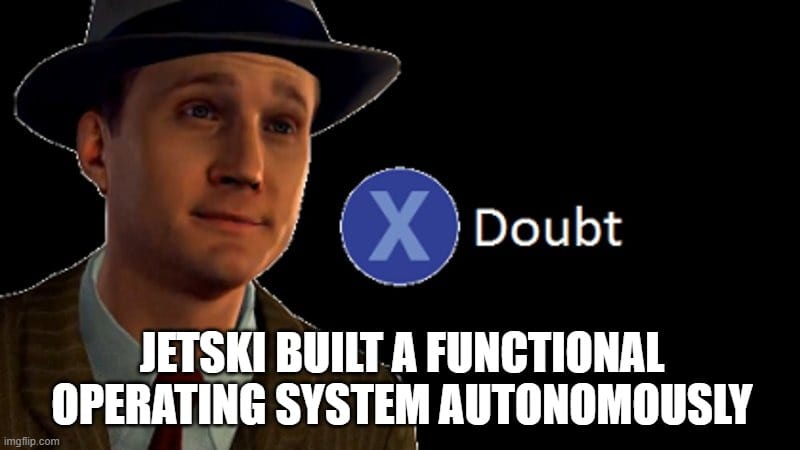
Internal skepticism at Google about its own AI tooling undercuts the company's public narrative on AI-assisted development. With 75% of Google's codebase now generated by AI, the gap between executive claims and engineer sentiment signals either quality issues with current-generation code models or broader concerns about productivity gains. This tension matters for the industry: if Google's own developers distrust their AI infrastructure at scale, it raises questions about whether similar tools deployed elsewhere are delivering promised efficiency, and whether the current wave of AI-assisted coding has hit a capability plateau.69

OpenAI CEO Sam Altman sees "proactive AI" as the next big phase after chatbots and agents
Sam Altman signals OpenAI's strategic pivot toward autonomous AI systems that operate continuously without user initiation, marking a conceptual shift beyond reactive chatbots and agent frameworks. The move addresses a dual market friction: spiraling inference costs and widespread organizational uncertainty about AI deployment. This positioning reflects industry-wide pressure to demonstrate ROI on AI infrastructure spending and suggests the next competitive battleground centers on reducing human-in-the-loop overhead while maintaining cost efficiency. For enterprises, the implication is substantial: proactive AI reshapes workflows from pull-based queries to push-based automation, fundamentally altering how teams integrate AI into operations.73

An Interview with Microsoft CEO Satya Nadella About Finding Core Competencies
Nadella's strategic reflection on Microsoft's positioning within the AI stack reveals a company recalibrating around its OpenAI partnership and infrastructure play rather than competing directly on model development. The conversation surfaces tensions between capital intensity, software differentiation, and the emerging agentic computing layer, signaling how incumbents are reshaping their bets as the AI landscape matures beyond LLM commoditization. For investors and builders, this interview clarifies Microsoft's pivot toward platform control and enterprise integration over frontier model ownership.80

Biodefense in the Intelligence Age
OpenAI has published a strategic framework for integrating AI systems into biological defense and pandemic preparedness infrastructure. The initiative positions large language models and AI reasoning as tools for accelerating threat detection, epidemiological modeling, and coordinated response protocols across government and public health agencies. This represents a significant pivot toward AI-enabled critical infrastructure, signaling how frontier labs are now directly shaping national security policy and establishing themselves as essential partners in biosecurity governance rather than remaining purely commercial entities.94

7 Ways New Engineers Can Flourish in the Age of AI
IEEE Spectrum frames AI competency as a career imperative for early-stage engineers, arguing that foundational computer science knowledge remains non-negotiable even as generative tools reshape coding workflows. The piece positions AI literacy not as a replacement for systems thinking but as a force multiplier, signaling a broader industry shift where employers expect graduates to treat automation as a productivity layer rather than a threat. This reflects the maturing AI labor market's demand for engineers who can architect solutions above the abstraction layer rather than compete at the syntax level.
As AI gets better, it reveals an empty promise
Google's Gemini agent Spark demonstrates unsettling capability in personal context retention, accessing user information like pet names and family members without explicit disclosure. The hands-on coverage surfaces a critical tension in agent design: as systems grow more contextually aware and effective, they simultaneously expose privacy vulnerabilities and raise questions about consent boundaries. This gap between technical sophistication and user control represents a defining challenge for the next generation of AI assistants, forcing product teams to reconcile capability gains with transparency obligations.
The Nvidia AI PC, Project Solara, Microsoft AI
Stratechery's analysis positions Microsoft's Build conference vision for AI-integrated devices as strategically superior to Nvidia's Project Solara, signaling a shift in how the industry thinks about AI hardware commoditization. The comparison reflects deeper tensions in the AI PC market: Nvidia's approach emphasizes local compute power, while Microsoft's framework prioritizes cloud-device orchestration and software integration. This divergence matters because it shapes whether future AI adoption hinges on edge silicon dominance or platform lock-in through services. For infrastructure investors and device makers, the verdict suggests the next wave favors companies controlling the software layer over those betting solely on chip performance.73

An economist's case against the AI jobs-pocalypse
Labor economist Kathryn Anne Edwards challenges the prevailing narrative that AI will render large populations permanently unemployed, arguing instead that displacement is manageable if policy responds proactively. Her position reframes the AI jobs debate away from technological inevitability toward institutional readiness, suggesting the real risk lies not in automation itself but in inadequate social infrastructure. This perspective matters for AI stakeholders because it shifts focus from whether AI disrupts labor (settled) to whether governments can architect safety nets fast enough, making policy design a competitive advantage for regions that move first.68

OpenAI vs. Anthropic vs. Google: But the Model Isn't the Point
The competitive framing of AI labs obscures what enterprise buyers actually prioritize: solving business problems cost-effectively. As OpenAI, Anthropic, and Google jostle for mindshare, procurement decisions increasingly hinge on integration ease, total cost of ownership, and task-specific performance rather than brand loyalty or model pedigree. This shift signals maturation in the AI market, where differentiation moves upstream to applications and workflows, not foundation models alone. For enterprises, the implication is clear: vendor lock-in weakens as model commoditization accelerates, forcing labs to compete on reliability, support, and ecosystem depth.61

Mathematicians warn of AI threats to profession as industry encroaches
The International Mathematical Union has formally cautioned against technology industry encroachment into academic mathematics, signaling institutional pushback against AI firms recruiting talent and shaping research agendas. This reflects a broader tension between commercial AI development and foundational science: as LLM capabilities increasingly depend on mathematical breakthroughs, industry's ability to redirect top-tier researchers toward applied problems threatens the autonomy of pure mathematics. The endorsement carries weight because it represents coordinated concern from the global mathematics establishment, not isolated grumbling, and hints at potential friction over intellectual property, publication norms, and the pace of knowledge transfer from academia to industry.
Martin Scorsese becomes the latest , and most unlikely , Hollywood voice for AI
Martin Scorsese's adoption of AI for storyboarding signals a watershed moment in creative-industry acceptance of generative tools. Rather than resistance from legacy filmmakers, the narrative has shifted to pragmatic integration within established workflows. This validates AI's role in pre-production infrastructure and suggests that high-profile creative endorsement, even when narrowly scoped, carries outsized weight in normalizing AI across sectors traditionally skeptical of automation. The story matters less for what Scorsese is doing than for what his participation signals about the erosion of cultural gatekeeping around AI tooling.
GitHub’s Agent Era: 14x Commits, 200M Developers, Copilot’s Next Act , Kyle Daigle
GitHub's COO Kyle Daigle discusses how AI agents are reshaping developer workflows and open-source collaboration at scale. Rather than code completion, the focus shifts to autonomous systems handling pull request review, internal knowledge work, and cross-platform integration via Copilot's desktop, CLI, and cloud variants. This signals a structural shift in how 200M developers interact with version control and how enterprises embed AI into operational infrastructure, moving beyond autocomplete into decision-making layers.85

Why Aren’t We Measuring How AI Affects Humans?
The AI industry has built sophisticated measurement frameworks for model capabilities while largely ignoring systematic assessment of how these systems reshape human cognition, relationships, and behavior. Imran Khan at the Center for Humane Technology argues this gap represents a critical blind spot as deployment accelerates. The absence of psychosocial evaluation metrics mirrors historical regulatory failures in other technologies, leaving organizations to deploy tools with unknown downstream effects on users and society. This framing positions human-impact measurement as an urgent infrastructure gap rather than a peripheral concern.
Gemini Spark is the most impressive and terrifying AI experience I’ve had yet
Google's Gemini Spark represents a meaningful inflection in agentic AI capability, moving beyond static chatbot interactions toward autonomous task execution. The piece signals that multi-step planning and real-time information synthesis, long-promised but rarely delivered at scale, are now functionally viable. This matters because it resets expectations for what constitutes a competitive AI product and forces rivals to demonstrate equivalent autonomy depth rather than raw language quality alone. The 'terrifying' framing hints at capability leaps that touch on safety and control boundaries, a recurring tension as agents gain agency.
Rehumanizing global health care with agentic AI
MIT Technology Review examines how agentic AI systems can address structural failures in global healthcare delivery, where decades of underinvestment and workforce burnout have created fragmented access and deteriorating outcomes. The piece positions autonomous AI agents as infrastructure capable of bridging care gaps and reducing clinician strain, signaling a shift from AI-as-tool to AI-as-system-redesigner in mission-critical sectors. This reflects growing confidence that agent-based architectures can tackle coordination and resource allocation problems that traditional software cannot solve, with implications for how enterprises deploy AI beyond productivity gains.
The Google Capital Company
Google's equity issuance to Berkshire Hathaway reflects a structural shift in AI economics where access to capital now rivals technical capability as a competitive moat. The deal signals that frontier model development and inference infrastructure have reached a scale where balance-sheet strength determines who can sustain the compute arms race. For AI builders, this underscores that funding velocity and capital efficiency will increasingly separate winners from contenders in the next phase of AI deployment.85

How small businesses can leverage AI
MIT Technology Review's Making AI Work series explores how small businesses can deploy LLMs across core functions like accounting, design, and product development. The piece addresses a critical gap in AI adoption: while large enterprises can afford specialized talent, SMBs must find efficiency gains through AI-assisted workflows. This signals a maturing market where practical implementation guidance matters more than capability announcements, positioning LLMs as force multipliers for resource-constrained teams rather than novelty tools.
A Second Nobel Prize for AlphaFold? 🧬🏆 #alphafold #deepmind #nobelprize #science #ai
AlphaFold's adoption has crossed 3 million researchers, positioning AI-driven structural biology as a permanent pillar of scientific infrastructure rather than a novelty. The discussion around a second Nobel Prize signals that the field is grappling with how to measure and recognize cumulative impact when AI systems become foundational tools. This reflects a broader shift in how the scientific community values computational breakthroughs that enable discovery at scale, raising questions about attribution and incentive structures in an AI-augmented research ecosystem.
Advancing youth safety and opportunity through global leadership
OpenAI is pushing for coordinated international governance around AI safety risks to young users, proposing a dedicated institute to set standards and coordinate policy. This signals a strategic pivot toward positioning safety infrastructure as a public good rather than a competitive moat, potentially reshaping how frontier labs engage with regulators and shape emerging governance frameworks. The move reflects growing pressure on AI companies to demonstrate proactive harm mitigation before regulation hardens, and could influence how other labs approach youth-focused deployment and compliance.81